3 vows of an intellectual life
Autonomous learning, kind sharing, conscious contemplation
The Friar explained to me the path to enter the Franciscan order. Of the whole journey, which is rather long, I became obsessed with one thing in specific: the three knots and three vows. What a designer thing to be obsessed with a symbol, am I right?
Each of the knots on the rope the Friar wears is dedicated to one of the vows they make to sustain their religious journey. Each knot is made by a superior once they go through each phase, at the end having made the vow of obedience, of chastity and of poverty.
I had gone on this trip to assuage my once a year (at least) epiphany of "what I am doing now?" and "what am I doing next?" so the concept of someone living almost every aspect of their life with basis on three little words enchanted me. God, how relieving it must be to find a purpose in life, how much lighter a lot of decisions must feel on your shoulders.
Before this encounter, all that came up to mind when hearing about vows was marriage vows or action-packed promises to protect someone. It always sounded so cinematic and unreal - or bound to be broken - that it never occurred to me how feasible it is. But then, on top of this hill it took me half an hour to go up, I met a man living firstly and mostly not by complex schemes, but simply three words. All of them aiming towards what he believes in.
I wish I could steal his vows. But I can't. I clearly do not believe in god.
But I do believe in books.
Matter of fact, on the thirteen hour ride to this city, all I did was read and write and life felt so meaningful on those hours that, on the way down the hill, I came up with these vows:
- Autonomous learning
- Kind sharing
- Conscious contemplation
Autonomous learning
The pursuit for knowledge must be autonomous. One must never let time, money or an institution stop them from learning about a subject. One will not limit their understanding of a field to their school curriculum.
Self-education is, I firmly believe, the only kind of education there is. The only function of a school is to make self-education easier; failing that, it does nothing. - Isaac Asimov
If anything piques your interest, one must pursue it.
Autonomous learning is not to be restrained within self-learning. There is something very beautiful in pursuing a subject on your own, but there is something equally beautiful in knowing your place on a given field.
If I have seen further it is by standing on the shoulders of giants. — Isaac Newton
Kind sharing
There is enormous joy in communing with other minds to learn something that interests you. May all autonomous minds meet at a place and rejoice.
Please bring a piece of writing that inspired you, changed you, meant something to you, or otherwise got stuck in your head.
Also, be prepared to read it, and talk briefly about why you chose it (before or after).
It can be serious, funny, fiction, non-fiction, whatever. As long as it's words. The basic guideline would be 1,000 of them maximum, but we're all figuring it out together.1
May all minds rejoice through the kind exchange of knowledge. The intellectual must seek and accept every opportunity to converse about their knowledge without looking down or up but simply forward to a speaker or down to a piece of paper with an end.
If there's a book that you want to read, but it hasn't been written yet, then you must write it - Toni Morrison
And may they rejoice not only in the compliments, in the agreements and the abstracts. But in the inquiries, the twists and the developments. May they not cap the subject to be what they brought to the conversation, or what was catered to them before they even wondered.
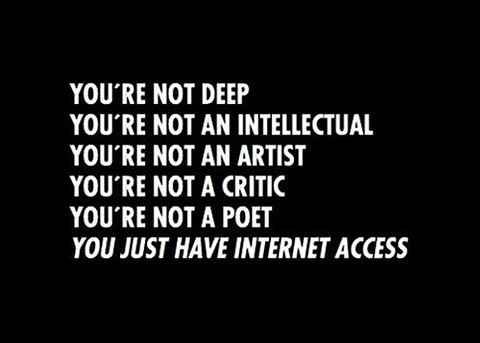
So one must prepare for this conversation with the same energy he prepares for the learning, with organized tools and receipts of what one knows.
That's the thesis of Sönke Ahrens's How to Take Smart Notes, which argues that notetaking is foundational to the practice of writing. Every intellectual endeavor starts with a note, Ahrens asserts. Good writing begins with good note-taking.2
To get a good paper written, you only have to rewrite a good draft; to get a good draft written, you only have to turn a series of notes into a continuous text. And as a series of notes is just the rearrangement of notes you already have in your slip-box, all you really have to do is have a pen in your hand when you read.3
With enough notes and enough time, the sharing will happen effortlessly in all directions, even within.
I felt a deep gratitude to him, for all he has given me, all the experiences and friendships that make my life better than his, and which his willingness to persevere brought into existence. If you only knew, I said out loud in the empty library, how thankful I am for what you have done. Something eased in me.4
Conscious contemplation
And in between the learning and the sharing, one must create space for nothingness.
In the nothingness, everything that comes in through the reading, the watching, the listening and the talking will dance on your head. One must have discipline so that even if one is certain that their thoughts are dancing the same choreography as everyone's else's, one will still provide them with enough space for the dance moves to turn into unseen choreographies.
Two things speak to each other and a third thing comes to me - Charles Broskoski
One must resist persistently the make-belief of the brain as a nuclear reactor, in which the more you cram in and the faster you make the thoughts bounce, the bigger the explosion of eureka moments will be. Knowledge is not an explosion nor the detritus of one. Knowledge is expansion, give it space.
Efficiency is highly overrated, goofing off is highly underrated. Regularly scheduled sabbaths, sabbaticals, vacations, breaks, aimless walks and time off are essential for top performance of any kind. The best work ethic requires a good rest ethic. - Kevin Kelly
What we do here, besides talk with our hands a lot, is cultivate worldview. I think those two words sum it up nicely. Worldview is, as you know, a particular philosophy of life. It implies the entirety of what we comprehend and believe about the world, about ourselves, about how each interacts with the other. It suggests a commitment, a modest one, to the well rounded individual, the intellectual life. We at the Nerdwriter are men and women of letters. As Terrence said, nothing human is foreign to us. We recognize that life is philosophical, moral, political, financial, psychological, artistic, scientific, and that what is worth knowing is worth weaving into a complex and comprehensive web. That's what goes on here at The Nerdwriter.5
Do these vows make any questions easier to answer?
Do they diminish any of my anguishes?
Do they tell me the purpose of life?
They do make it easier to choose how I'll spend tomorrow. I'll take that.
Footnotes
-
Excerpt from Marcin Wichary's text Party Where We Read Things ↩
-
Excerpt from oblique strategies for starting a new project by personal canon ↩
-
Excerpt from oblique strategies for starting a new project by personal canon ↩
-
Excerpt from the deeply profound The Third Chair by Henrik Karlsson ↩
-
Transcription from The Nerdwriter Is Creating Video Essays ↩